Awards and Grants ×

News

Topology of cancer

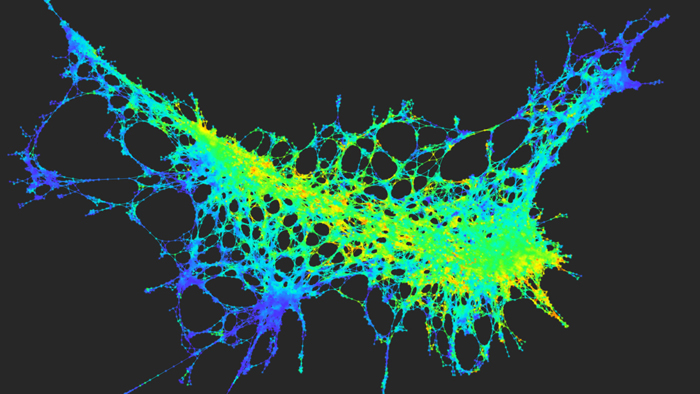
The Columbia University Center for Topology of Cancer Evolution and Heterogeneity will combine mathematical approaches from topological data analysis with new single-cell experimental technologies to study cellular diversity in solid tumors. Image courtesy of Raul Rabadan.

The National Cancer Institute’s Physical Sciences in Oncology program has announced the creation of a new center for research and education based at Columbia University. The Center for Topology of Cancer Evolution and Heterogeneity will develop and utilize innovative mathematical and experimental techniques to explore how genetic diversity emerges in the cells that make up solid tumors. In this way it will address a key challenge facing cancer research in the age of precision medicine — how to identify the clonal variants within a tumor that are responsible for its growth, spread, and resistance to therapy. Ultimately, the strategies the Center develops could be used to identify more effective biomarkers of disease and new therapeutic strategies.

Gut-Brain Microbiota
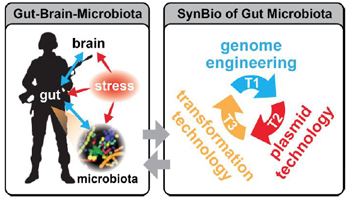
A grant from the Office of Naval Research will support the development of three foundational synthetic biology technologies for engineering the human gut microbiota.

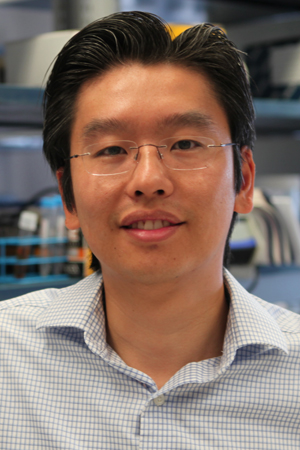
Harris Wang, an assistant professor in the Columbia University Department of Systems Biology, has been selected for the Office of Naval Research 2015 Young Investigators Program. This highly selective program promotes the development of early-career academic scientists whose research shows exceptional promise and creativity. With the support of this award, Dr. Wang will extend his research in the field of synthetic biology to develop new technologies for engineering the gut microbiome, the ecosystem of bacteria that inhabit the human digestive system. These new methods, Wang anticipates, could provide new ways of designing communities of different microbial species and ultimately modulating interactions between the gut, the immune system, and the brain.

Rodney Rothstein
Rodney Rothstein

The Columbia University Department of Systems Biology congratulates Rodney Rothstein on his election to the National Academy of Sciences. The NAS is a private, non-profit society of distinguished scholars that provides independent, objective advice to the nation on matters related to science and technology. Scientists elected to the NAS are chosen by their peers in recognition of their distinguished and continuing achievements in original research.

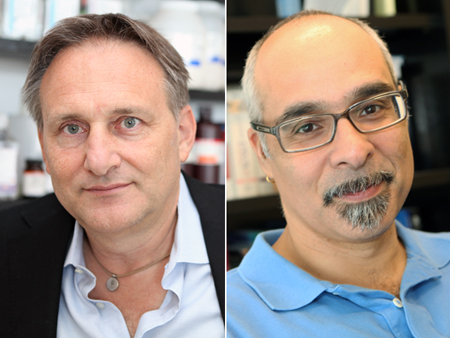
Andrea Califano and Aris Floratos
Andrea Califano and Aris Floratos will lead an effort to reclassify tumors catalogued in TCGA according to their master regulators.

Andrea Califano and Aris Floratos, faculty members in the Columbia University Department of Systems Biology, have received a two-year, $624,236 subcontract to develop a new classification system of cancer subtypes. The agreement was awarded through a subcontract from Leidos Biomedical Research, Inc., which operates the Frederick National Laboratory for Cancer Research for the federal government.  

By performing an integrative analysis of genomic data from the Cancer Genome Atlas (TCGA) and proteomic data from the National Cancer Institute’s Clinical Proteomic Tumor Analysis Consortium (CPTAC), the researchers plan to recategorize tumors collected in TCGA based on the master regulator genes that determine their state. This is in contrast to other approaches based on expression of genes that reflect tissue lineage and proliferative processes. In addition, the team will link the genetics of each tumor sample to the specific master regulators that determine its state using a recently published novel algorithm (DIGGIT). Ultimately, the project aims to provide a more useful catalog of pan-cancer subtypes that could help to identify biomarkers and therapeutic targets for specific kinds of tumors, and ultimately provide a resource to guide the next generation of precision medicine.

“We have to reevaluate the way in which we organize tumors within subtypes, using both gene expression data and mutational data,” says Dr. Califano. “Right now the common approach is to classify tumor types based on rather generic genes that are differentially expressed between subtypes. But most of these genes play no role in actually driving the disease. We want to shift the emphasis and classify tumors based on the genes that truly regulate tumor state and survival.”

Harris Wang

Harris Wang, an assistant professor in the Columbia University Department of Systems Biology and Department of Pathology and Cell Biology, has been selected to receive a 2015 Alfred P. Sloan Foundation Research Fellowship in computational and evolutionary molecular biology. This two-year, $50,000 grant will support work that combines methods from synthetic biology and computational biology to study how horizontal gene transfer contributes to microbial evolution.

Since 1955, the Sloan Research Fellowship program has supported outstanding early-career scientists in recognition of their achievements and their potential to make important contribution to their fields. This year’s fellows included 126 investigators, with 12 awardees in the field of computational and evolutionary molecular biology. Other disciplines represented in the awards include chemistry, computer science, economics, mathematics, neuroscience, ocean sciences, and physics.

Dana Pe'er and Kyle Allison

Dana Pe'er has received the Pioneer Award for high-risk, high-reward research, and postdoctoral scientist Kyle Allison has won an Early Independence Award.

Two members of the Columbia University Department of Systems Biology have been named recipients of NIH Director’s Awards from the National Institutes of Health Common Fund.

Associate Professor Dana Pe’er is one of 10 winners of the 2014 NIH Director’s Pioneer Awards. The Pioneer Awards provide up to $2.5 million over 5 years to support exceptionally creative investigators who are pursuing “high risk, high reward” science that holds great potential to transform biomedical or behavioral research. The award will support an ambitious new project to develop the technological and computational methods necessary to create a comprehensive, high-resolution atlas of development for all cell types in the human body.

In addition, Kyle Allison, a postdoctoral scientist in the laboratory of Professor Saeed Tavazoie, has received the NIH Director’s Early Independence Award. (Dr. Tavazoie is also a past winner of the Pioneer Award.) This program enables outstanding young investigators who have recently completed their PhD’s to move rapidly into independent research positions. Dr. Allison is one of just 17 scientists to receive this award this year. In combination with the Department of Systems Biology Fellows program, this five-year, $1.25 million grant will allow him to open his own laboratory at Columbia and pursue independent research to investigate the problem of bacterial persistence. He is the second Department of Systems Biology investigator to receive the Early Independence Award, joining Assistant Professor Harris Wang in being recognized with this honor.

“Having four recipients of NIH Director’s Awards within the Department of Systems Biology — and particularly two in one year — is quite remarkable,” said Department Chair Andrea Califano. “I think it’s a testimony to the timeliness of the perspectives and tools that systems biology offers and to the high quality of research being conducted at Columbia. I look forward to the discoveries that will undoubtedly come from Dana’s and Kyle’s extremely exciting efforts.”
M. Tuberculosis Culture

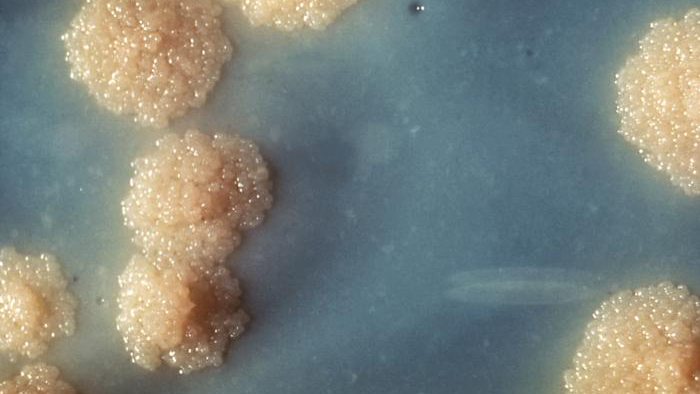
M. tuberculosis bacterial colonies. Photo credit: CDC/Dr. George Kubica [Public domain], via Wikimedia Commons

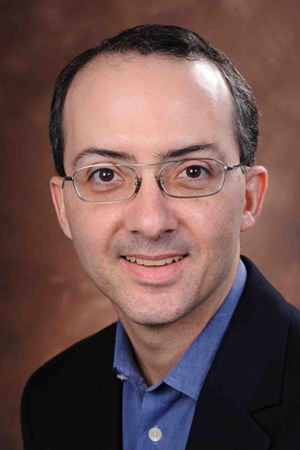
Dennis Vitkup, an associate professor in the Columbia University Department of Systems Biology and Department of Biomedical Informatics, has  been awarded an R01 grant from the National Institute of General Medical Sciences (NIGMS) to develop a computational pipeline for predicting bacterial metabolic networks. Building on a framework called GLOBUS that was previously developed in his lab, the project will produce probabilistic annotations of metabolic networks for all of the major bacterial species that cause disease in humans. It will both offer a method that can be used to study metabolism in any species of bacteria and produce valuable information that will aid researchers who are looking for therapies against many of the world’s most deadly pathogens.

Brent Stockwell Congratulations to Brent Stockwell, one of 10 recipients of the 2014 Lenfest Distinguished Teaching Awards. Dr. Stockwell is an Associate Professor of Chemistry and Biological Sciences, and a member of the Columbia University Department of Systems Biology.

Established through a donation by trustee Gerry Lenfest (Law '58), the Lenfest Award recognizes faculty who are not only accomplished scholars but also exhibit excellence in instruction and mentorship, as well as university citizenship and professional involvement. Each recipient of the Lenfest Award receives a prize of $25,000 for a three-year period and is recognized at the Lenfest Award dinner.

Dana Pe'erDana Pe’er, an associate professor in the Columbia University Department of Biological Sciences and Department of Systems Biology has been named the winner of the 2014 Overton Prize. Awarded by the International Society for Computational Biology (ISCB) since 2001, the Overton Prize recognizes one outstanding early- to mid-career scientist each year who has already made a significant contribution to the field of computational biology through research, education, service, or a combination of the three. The award recognizes Dr. Pe'er "for her cutting-edge research that applies computational methods to complex data to understand the organization of molecular networks in cells at a holistic systems level."

As the winner of the 2014 Overton Prize, Dr. Pe’er will receive the award and present a keynote address at the ISCB’s 22nd Annual International Conference on Intelligent Systems for Molecular Biology, which will be held in July 2014 in Boston.

In her research, Dr. Pe’er leads the development of computational methods for integrating large, diverse collections of high-throughput biological data, with the goal of understanding the structure and function of molecular networks. In recent work, she has focused on developing methods for interpreting data from single cells and characterizing heterogeneity in populations of cells with diverse phenotypes. She is also developing computational models for understanding the effects of epigenetic variation on regulatory network function and how these changes in regulatory networks lead to specific phenotypes in health and disease. These areas of investigation are particularly relevant within the field of cancer research, and the Pe’er lab’s findings and computational methods have offered new strategies for improving personalized medicine for cancer care.

Barry Honig, Professor of Biochemistry & Molecular Biophysics, Howard Hughes Medical Institute investigator, and Director of the Center for Computational Biology and Bioinformatics, was honored by The Protein Society with the Christian B. Anfinsen Award. The award, sponsored by The Aviv Family Foundation, recognizes significant technical achievements in the field of protein science. The following is an excerpt from the award citation: Dr. Honig is the recipient of the 2012 award for his contributions to our understanding of the electrostatic properties of proteins and the development of DelPhi and GRASP, which are among the most widely used programs in structural biology. These and other computational tools from his group have enabled numerous discoveries related to protein molecular recognition, protein-membrane interactions, and protein structural stability. Honig's own recent discoveries related to cell-cell adhesion and sequence-dependent protein-DNA recognition are outstanding examples.

Barry Honig, Professor of Biochemistry & Molecular Biophysics, Howard Hughes Medical Institute investigator, and Director of the Center for Computational Biology and Bioinformatics, was honored by The American Society for Biochemistry and Molecular Biology with the DeLano Award for Computational Biosciences for his work in macromolecular interactions in biology. The award is given to a scientist for innovative and accessible development or application of computer technology to enhance research in the life sciences at the molecular level. Dr. Honig's software tools and their underlying conceptual basis are widely used by the general biological research community to analyze the role of electrostatics in macromolecular interactions.

The John Simon Guggenheim Foundation has named Harmen Bussemaker, Associate Professor in Columbia's Department of Biological Sciences, as one of its 2010 Fellows. The award supports a project titled "Deciphering the language of gene expression regulation," in which Dr. Bussemaker will combine methods from biophysics and genetics in order to predict the behavior of gene regulatory networks, and test these predictions using wet lab experiments. Guggenheim Fellows are appointed on the basis of impressive achievement in the past and exceptional promise for future accomplishment. Click here to learn more.

Harmen Bussemaker, Associate Professor in Columbia's Department of Biological Sciences, was one of this year's recipients of the Lenfest Distinguished Columbia Faculty Award. The awards are given annually to faculty of unusual merit across a range of professorial activities — including scholarship, University citizenship, and professional involvement — with a primary emphasis on the instruction and mentoring of undergraduate and graduate students. Click here to learn more.

Andrea Califano, Professor of Biomedical Informatics, co-Director of the Center for Computational Biology and Bioinformatics, and Director of the National Center for the Multiscale Analysis of Genetic and Cellular Networks has been appointed for a 5 year term to the National Cancer Institute (NCI) Board of Scientific Advisors. The NCI Board of Scientific Advisors provide scientific advice on a wide variety of matters concerning scientific program policy, progress and future direction of the NCI’s extramural research programs, and concept review of extramural program initiatives.

At the 2008 Annual Meeting of the cancer Biomedical Informatics Grid (caBIG™) initiative, members of the C2B2 software development team were recognized with awards for their technical achievements and contributions to the program, including their work in defining standards for the execution of bioinformatics workflows on caGrid (the grid infrastructure of caBIG) and in interfacing caGrid with TeraGrid, one of the largest national computational grid networks.

The Center for Computational Biology and Bioinformatics (C2B2), in collaboration with the Broad Institute of MIT and Harvard, has a received a 3-year award from the National Cancer Institute to establish and operate the Molecular Analysis Tools Knowledge Center of the cancer Biomedical Informatics Grid (caBIG™) initiative. The mission of the Knowledge Center is to promote the adoption of caBIG™ technologies aiming to facilitate the discovery of the next generation of cancer diagnostics and therapeutics which will help realize the vision of molecular and personalized medicine. geWorkbench, the bioinformatics platform of the MAGNet Center, will be one of the tools supported by the Knowledge Center.

The caBIG™ initiative, overseen by the NCI Center for Biomedical Informatics and Information Technology, was conceived to advance basic and clinical research on cancer and improve clinical outcomes for patients. Information such as patient registries, tissue management data, and study results can be uploaded to the grid-based system.

Barry Honig, PhD, professor of biochemistry & molecular biophysics and Director of C2B2, was inducted into the American Academy of Arts & Sciences in an October 6 ceremony in Cambridge, Massachusetts. The Academy is an independent research center conducting multidisciplinary studies of problems in science, technology, and global security; social policy and American institutions; the humanities and culture; and education.

C2B2 has been awarded a contract to serve as the Data Analysis and Coordination Center for the International Serious Adverse Event Consortium (iSAEC). iSAEC is a nonprofit organization comprising leading pharmaceutical companies and academic institutions with scientific and strategic input from the U.S. Food and Drug Administration (FDA). Using the power of whole genome association (WGA) studies, iSAEC aims to (i) identify and validate DNA-variants useful in predicting the risk of drug-related serious adverse events, and (ii) make such discoveries freely available to the research community for further investigations. C2B2 will provide  computational infrastructure for the storage and analysis of the WGA data as well as information systems for the dissemination of the analysis results to the public.

Dana Pe'er has been presented with the 2007 NIH Director's New Innovator Award (http://www.nih.gov/news/pr/sep2007/od-18a.htm). Part of an NIH Roadmap for Medical Research initiative, this award recognizes outstanding scientists who are "well-positioned to make significant — and potentially transformative — discoveries in a variety of areas.”

This award, proposed by NIH Director, Elias A. Zerhoni, MD was created to help new scientists fund highly innovative approaches to major research challenges that could lead to significant medical advances.

Dr. Pe'er is assistant professor of biological sciences at Columbia University, a member of the Center for Computational Biology and Bioinformatics and an investigator at the MAGNet Center. She utilizes computational and biotechnology approaches to understand how a cell’s regulatory network processes signals and how the signal processing goes wrong in cancer.

geWorkbench Wins Award

geWorkbench, the bioinformatics platform of the MAGNet Center, was recognized with an excellence award during the 2007 annual meeting of the cancer Biomedical Informatics Grid (caBIG) initiative. The geWorkbench project team was sited for "excellence in the design, planning and implementation of one of the first unrestricted open-source software projects from integrative genomics analysis."